Product Designer at Ogon.team
2024 — PRESENT
Ogon.team — B2B SaaS for community management and monetization, like Circle but for the Russian market. I joined at the MVP scaling stage as a Solo Product Designer in a team of 7.
Problem
When I joined, the product had no users and no interest from potential clients. I benchmarked 17 competitors and ran 20 in-depth interviews together with the CEO. It turned out the platform was solving the wrong problems. The direction and vision needed to change.
Solution
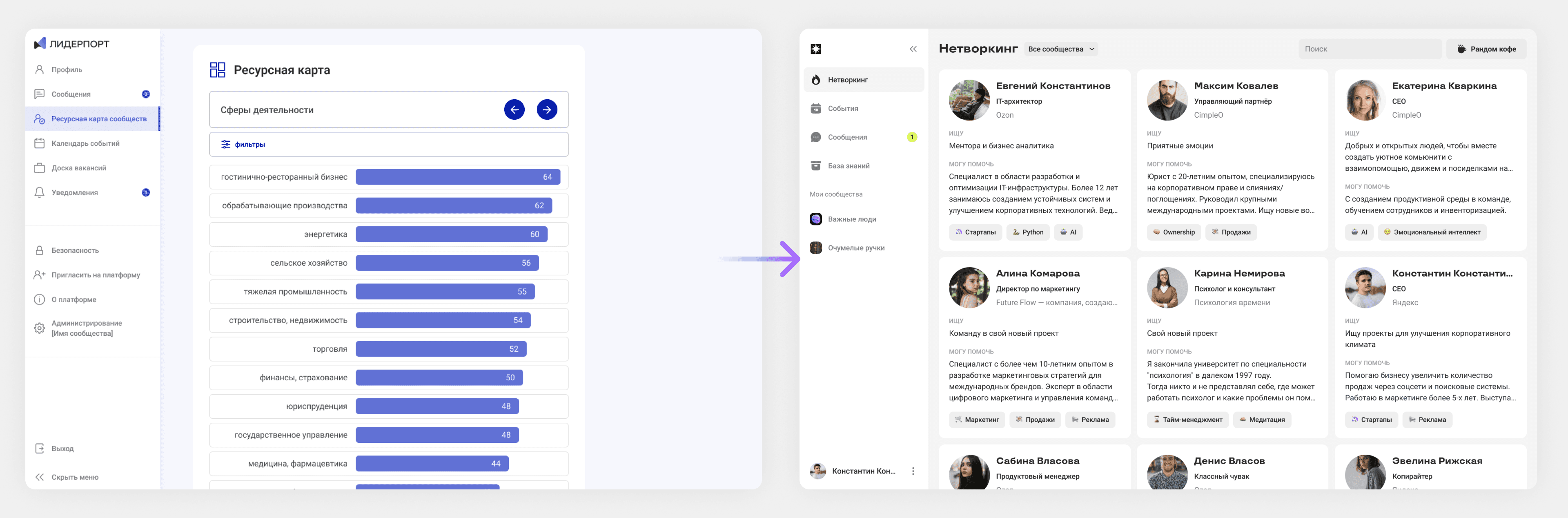
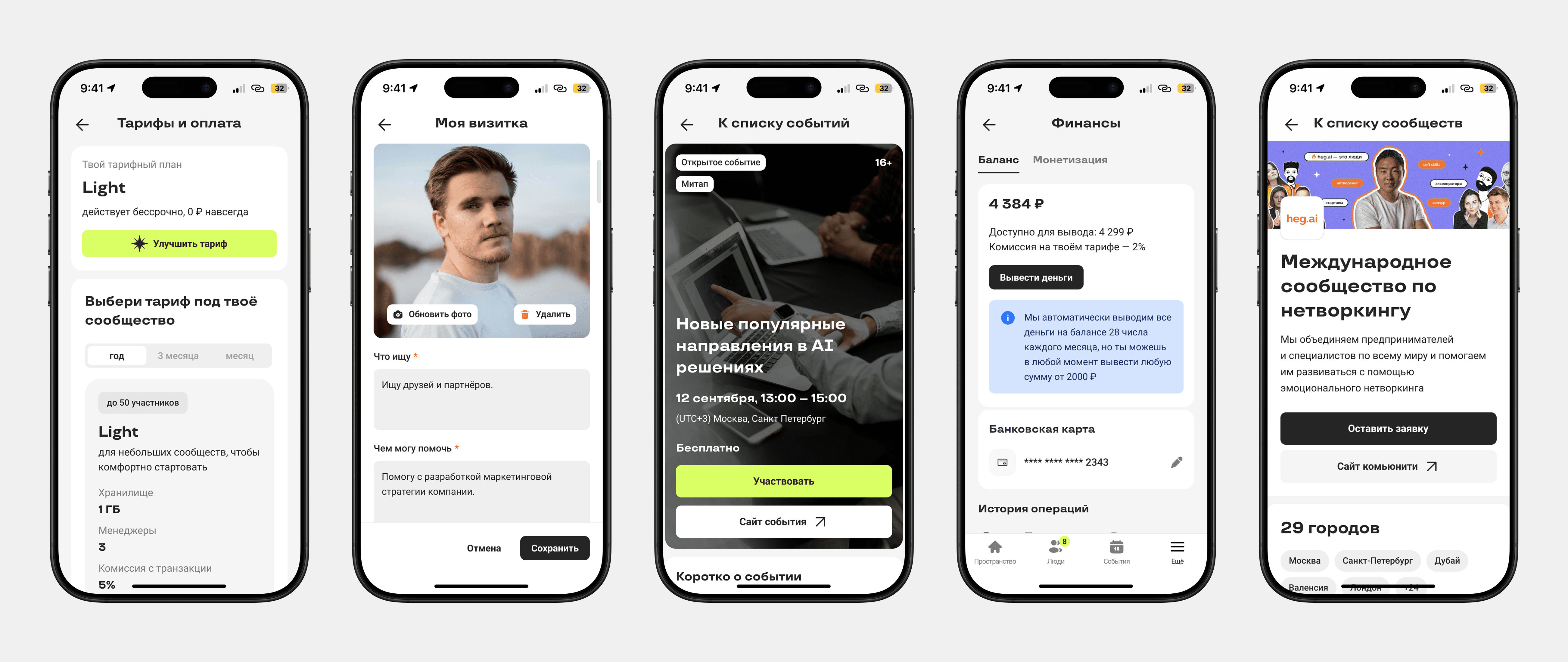
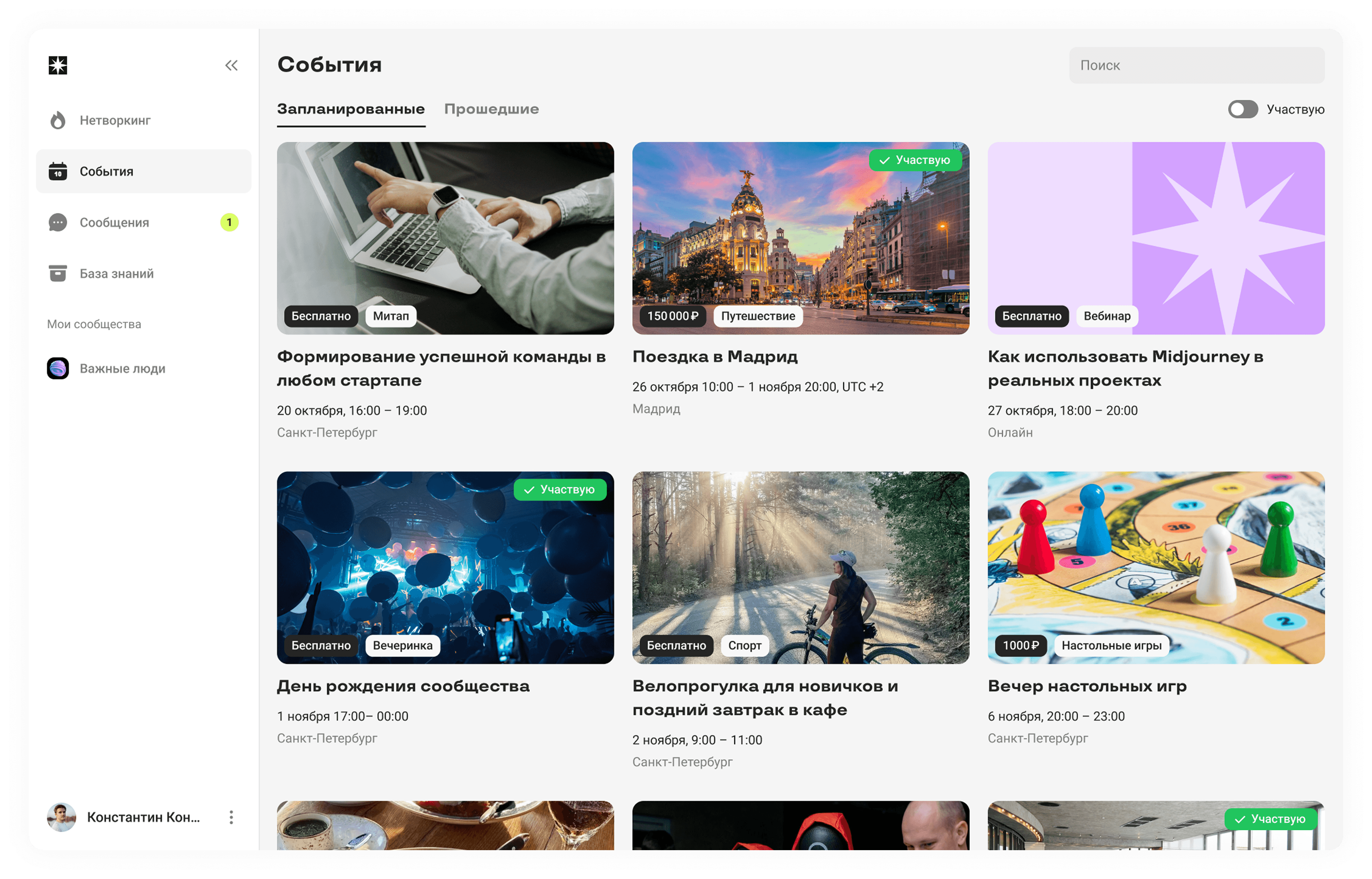
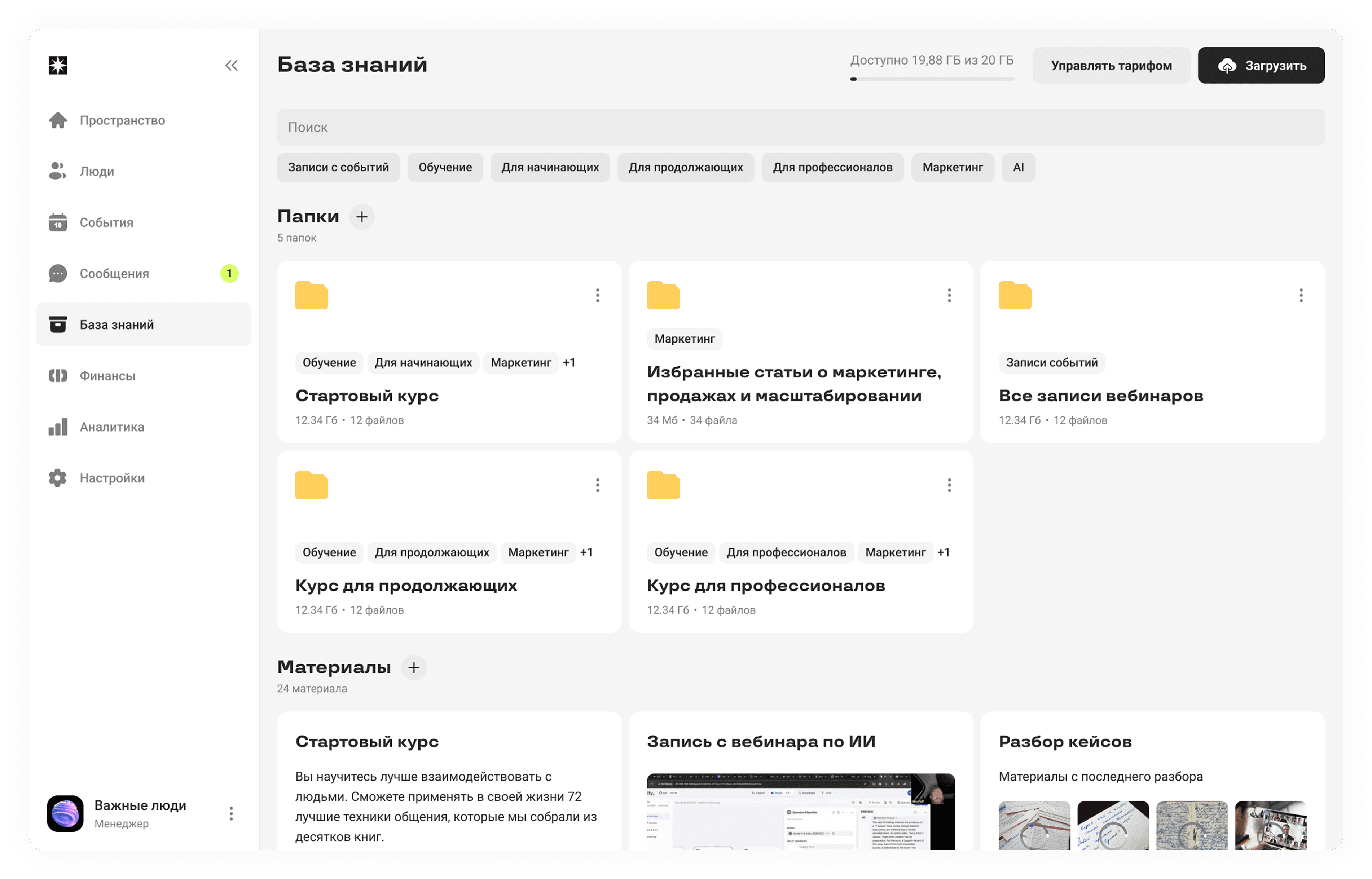
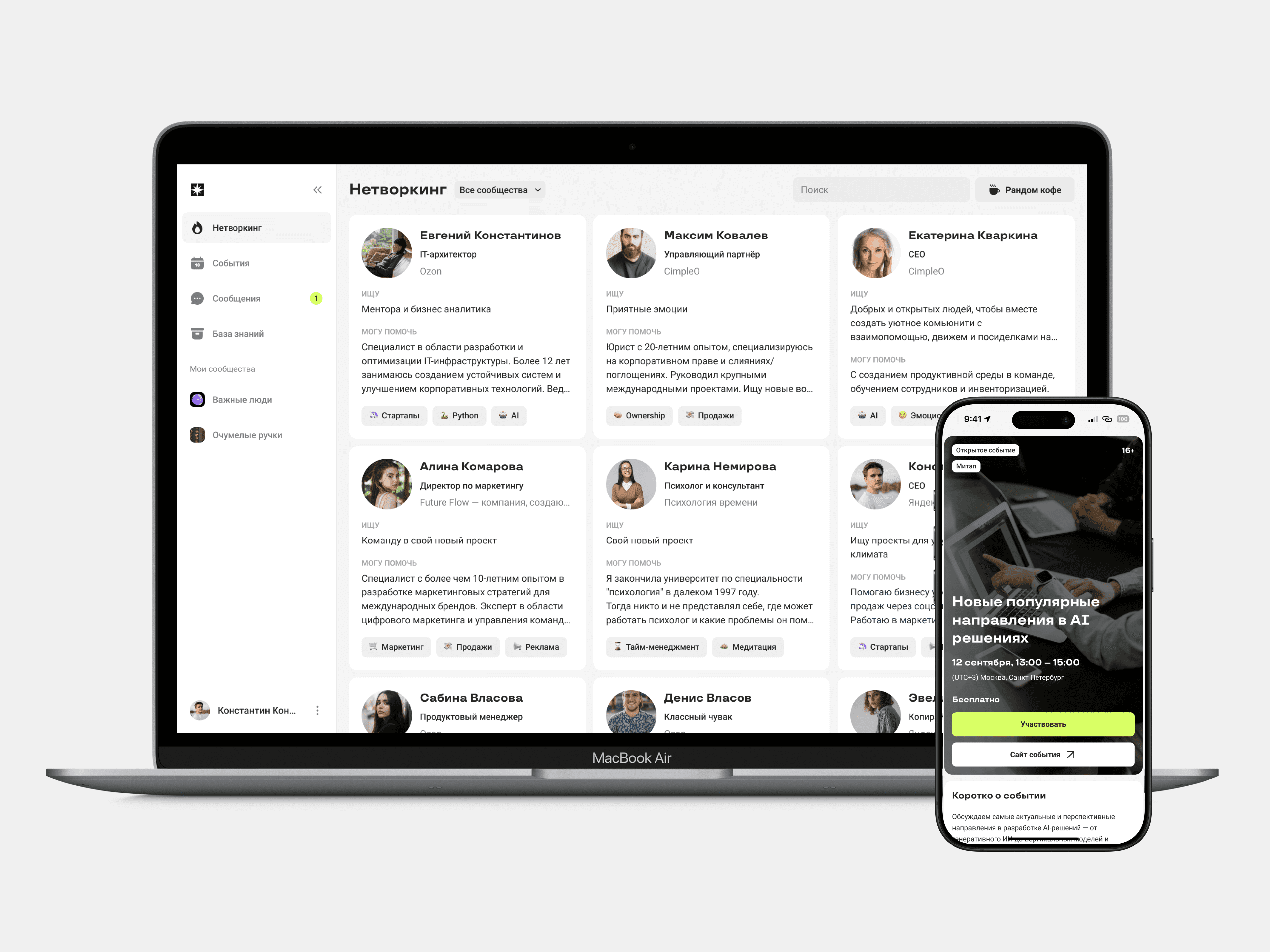
Based on the research, I redefined the Jobs to be Done, led a full rebranding, built the design system, restructured the user flow, conceived the core features of the service, and designed all sections from scratch including responsive layouts. Together with the team we rearchitected the platform and built a completely new web application.
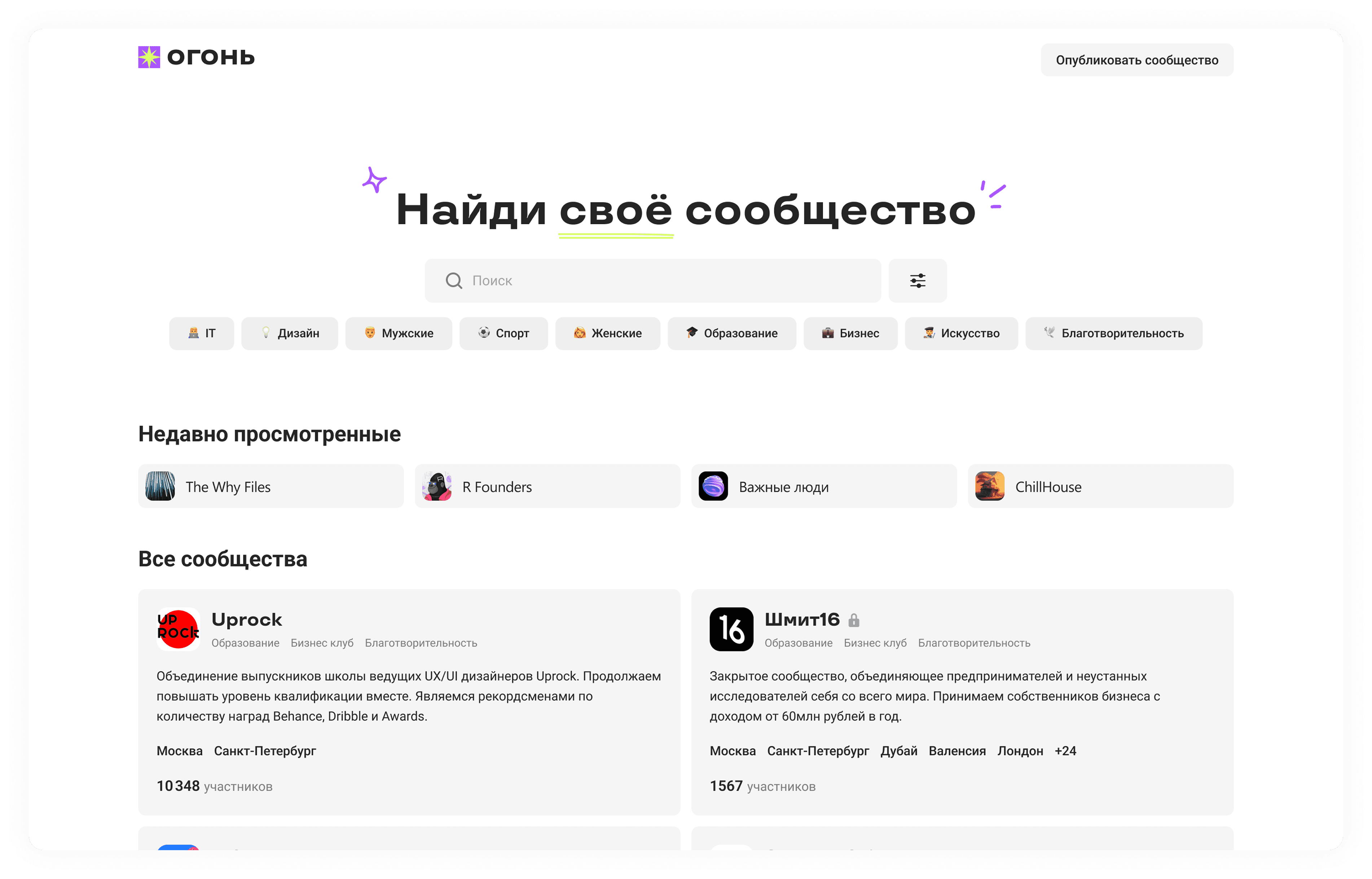
I also conceived and designed an additional product, which was built by an AI developer in 3 weeks — a community aggregator. It drives external traffic to communities and simultaneously serves as the entry point into Ogon.team. Publishing a community to the aggregator is part of the free tier.
Results
New platform architecture — we now maintain fewer applications than when we started.
New brand identity and a structured design system that meaningfully sped up development.
Registration now takes 40 seconds instead of 3 minutes.
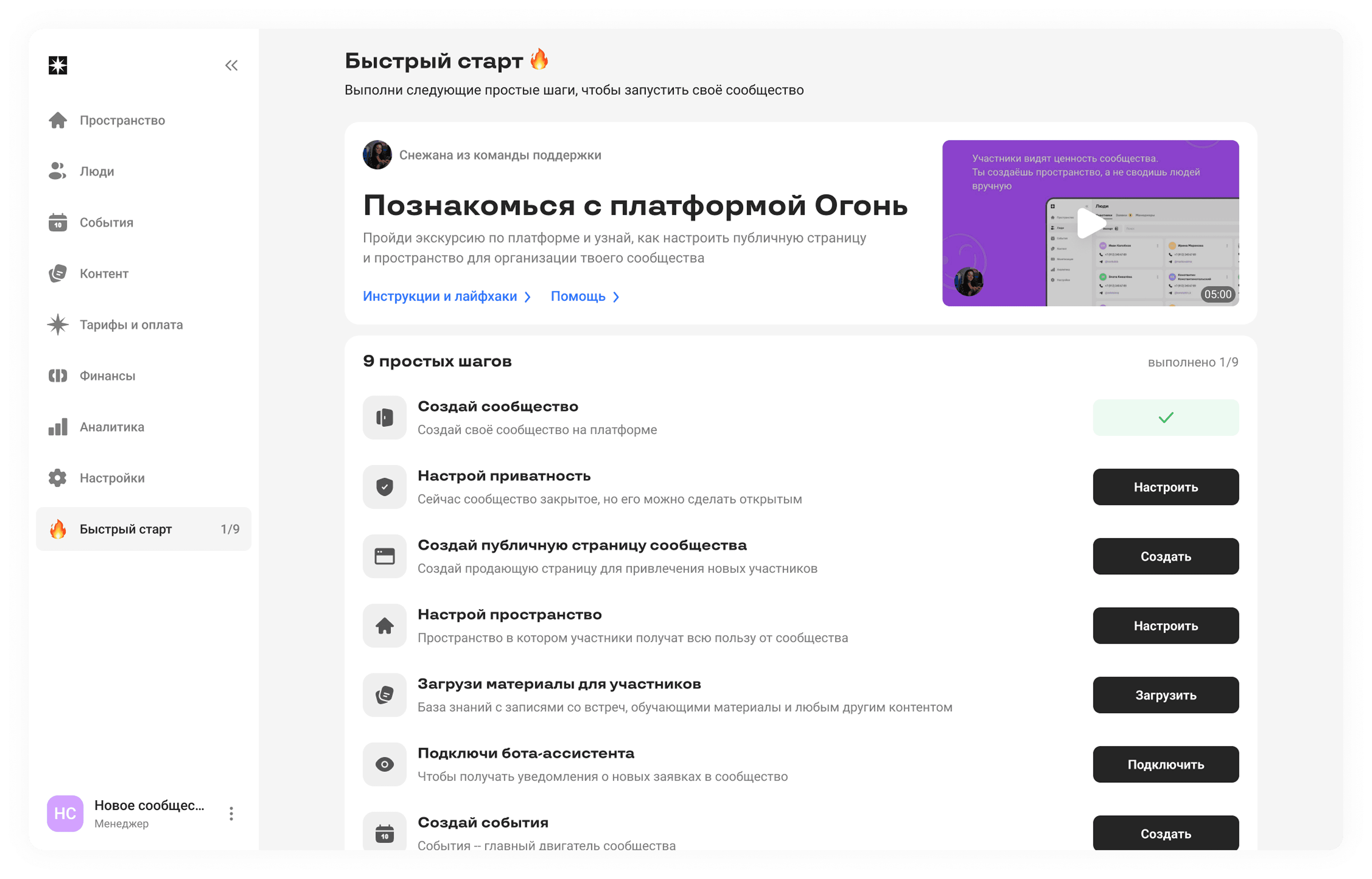
Creating a community takes 1 minute from sign-up to admin access — previously this was only possible through direct contact with our sales team.
A new working entry point into the product — the community aggregator, with 75 communities published.
At our conference, 61 out of 170 registered users used the Networking feature with no CTA from the organizers — 36% organic feature adoption.
The product went from zero customer interest to first sales, an active user base, and an incoming waitlist of communities waiting for the final features to launch.
What I'd do differently
Push harder and earlier. I had the right instincts from the start — the architecture, the direction, the priorities. The hardest part wasn't figuring out what to do — it was getting a risk-averse leadership to move.